High-voltage generator is used to produce controlled test voltages for evaluating the dielectric strength of insulation and electrical equipment. Depending on the voltage level, waveform, and test method, these systems can be used in laboratories, manufacturing plants, power substations, or for post-installation testing.
The test object is not limited to high-voltage equipment. Some low-voltage electrical equipment may also be subject to dielectric tests using AC, DC, or impulse voltage as required by the applicable technical standards. TCVN 11325:2016, equivalent to IEC 61180:2016, specifies high-voltage test techniques for low-voltage equipment rated up to 1 kV AC or 1.5 kV DC.
Power Cables and Cable Accessories
Power cables are one of the most common types of equipment subjected to high-voltage testing. These tests help evaluate the insulation system of the cable as well as related components such as connectors, cable terminations, and accessories.
For medium- and high-voltage cables, testing requirements may include withstand voltage, leakage current, or additional measurements depending on the cable type and applicable standards. TCVN 9617:2013 specifies test methods for electrical cable accessories with rated voltages from 6 kV to 30 kV, including requirements related to high-voltage and partial discharge testing.
When testing cables after installation or repair, a high-voltage generator can be used to raise the system to the specified test voltage according to the established procedure.
Transformers and Windings
Transformer insulation must withstand both operating voltage and overvoltage conditions specified by the design. High-voltage testing is therefore used during manufacturing, commissioning, and post-repair inspection.
The areas being evaluated are not limited to external insulation. The winding system, insulation between windings, and insulation between the windings and ground all have their own requirements.
For large power transformers, selecting the appropriate test source requires consideration of the test object's capacitance and the voltage level to be applied. An unsuitable generator configuration can affect voltage ramp-up time, voltage stability, and the overall test conditions.
Switchgear and Electrical Panels
Circuit breakers, disconnectors, switchgear, and high-voltage control equipment are also commonly subjected to dielectric testing.
The purpose is to verify the ability of insulation clearances to withstand voltage between energized parts and between energized parts and ground. For high-voltage switchgear, IEC 62271 specifies various dielectric tests, including voltage withstand tests and other tests related to insulation conditions.
For GIS, testing requirements are also associated with gas insulation and the structure of individual equipment compartments. This type of equipment requires careful consideration of the test source, measurement system, and safety controls.
Insulators and Insulating Materials
Ceramic insulators, polymer insulators, and other insulating components can be subjected to high-voltage tests to evaluate their dielectric performance under specified conditions.
In these tests, a DC high-voltage tester is raised according to the specified procedure to determine the dielectric withstand capability of the test specimen. The results may be evaluated based on discharge, breakdown, or other technical criteria depending on the test method.
For outdoor insulation, environmental conditions such as humidity, contamination, and surface condition can also affect the test results. Test conditions must therefore be controlled in accordance with the applicable standard.
Busbars and Electrical Conductors
Busbars are commonly used in electrical panels, distribution substations, and industrial power systems. In addition to insulation resistance measurements, busbars may undergo elevated-voltage testing to evaluate the withstand capability of the insulation system.
Some accredited testing laboratories perform power-frequency withstand voltage tests on busbars in addition to insulation resistance measurements.
One point to consider is that the test object may be either an individual busbar or the complete assembly after installation. The arrangement, phase-to-phase clearances, and grounding configuration must therefore be determined before testing.
Surge Arresters and Overvoltage Protection Devices
Surge arresters are designed to limit overvoltages entering an electrical system. Their operating mechanism differs from that of conventional insulation, so the same high-voltage test cannot be applied in every case.
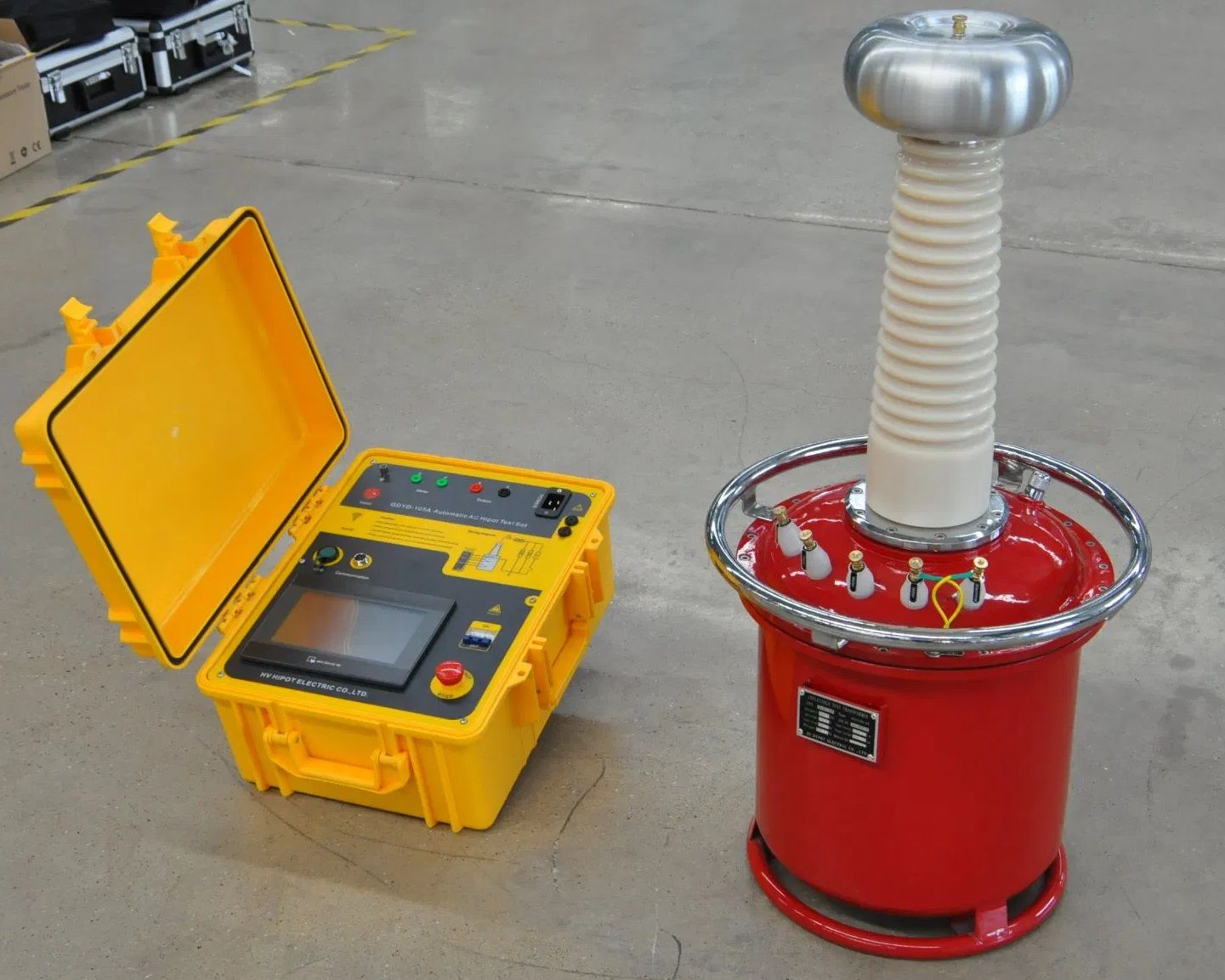
Specialized AC hipot tester can be used for tests appropriate to the characteristics of surge arresters. In extra-high-voltage transmission systems, surge arresters are also among the equipment covered by certain field testing requirements.
When testing these devices, particular attention should be paid to the voltage-limiting characteristics of the arrester, as they can affect the test conditions and results.
Voltage Transformers and Current Transformers
VTs/PTs and CTs can also be subjected to dielectric tests.
Test voltage is applied to evaluate insulation between windings, between windings and ground, or between parts at different electrical potentials, depending on the specific design requirements.
In very-high-voltage transmission systems, both voltage transformers and current transformers are among the equipment that may be included in field commissioning tests.
Low-Voltage Electrical Equipment
The applications of high-voltage generators are not limited to medium- and high-voltage equipment.
Low-voltage electrical equipment may also undergo dielectric testing during type tests or routine tests. IEC 61180 specifies test methods using DC, AC, and impulse voltages for equipment rated up to 1 kV AC or 1.5 kV DC.
This category may include electrical equipment, assemblies, and electrical products that require insulation verification before shipment.
Selecting a High-Voltage Generator for the Test Object
Although these tests all involve high voltage, the test voltage, waveform, application time, and evaluation criteria can vary considerably.
Power cables may require high-voltage withstand testing and leakage current measurement. Switchgear has specific dielectric test requirements. Insulation may need to be evaluated under dry or wet conditions. Some equipment may require impulse voltage testing rather than power-frequency AC voltage.
For long cables or highly capacitive test objects, the current and power requirements of the test source can increase significantly. For impulse testing, the impulse generator and measurement system differ from those used with conventional AC or DC sources.
High-voltage generators can be used at multiple stages throughout a product's lifecycle, including in-process manufacturing tests, routine or factory acceptance tests, post-installation commissioning, and post-repair inspections.
Identifying the test object and its specific requirements before selecting a high-voltage testing device helps ensure a more suitable system configuration and reduces the risk of having equipment that meets its rated voltage but does not satisfy the requirements of the actual test.