

10/10/2026 10:42:57
Directive (EU) 2024/1799 of the European Union (adopted on June 13, 2024, and officially taking effect on July 31, 2026) is the "Right to Repair" Directive, aimed at promoting the repair of goods rather than their disposal.
Directive (EU) 2024/1799 of the European Union (adopted on June 13, 2024, and officially taking effect on July 31, 2026) is the "Right to Repair" Directive, aimed at promoting the repair of goods rather than their disposal.
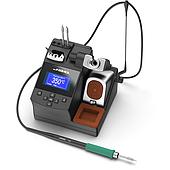
Lead-free soldering stations provide fast, stable heating to meet stringent quality and durability requirements across industries such as aerospace, medical devices, and automotive electronics. They also help protect operators' health and reduce environmental pollution.
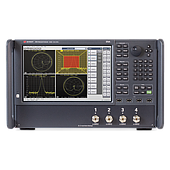
Power Distribution Network design can be affected by noise, instability, and inappropriate capacitor selection. Vector Network Analyzers help identify potential PDN issues from early design through development.
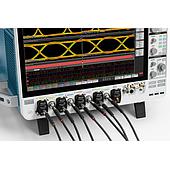
Tektronix has introduced the DPO718AX, the industry's first 8-channel oscilloscope offering more than 6 GHz of bandwidth per channel and up to 25 GHz of bandwidth across eight synchronized channels. It meets the demanding needs of engineers working in research, sensing, RF, and high-speed digital applications.
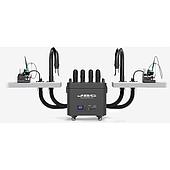
Most damage in modern electronics laboratories stems from two concurrent hazards: electrostatic leakage currents that can rupture the oxide layers of integrated circuits, and organic toxins contained in soldering fumes.
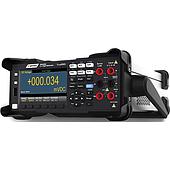
A bench DMM should be selected for its intended workflow: accuracy and visibility for R&D, repeatable throughput for QA, or reliable remote integration for ATE.
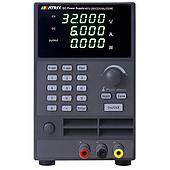
Low ripple and high accuracy solve different circuit-test risks: noise-sensitive work needs a clean output, while margin and tolerance tests depend on trustworthy setpoints.
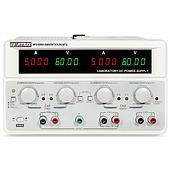
An adjustable DC power supply should match the application’s voltage and current requirements, include suitable protection functions, and fit the existing test setup’s interface needs.
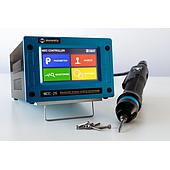
Torque-controlled assembly tools can help electronics manufacturers apply and document fastening requirements, verify bit selection, enforce sequences, and collect station-level process data.

In many real-world operational systems, clearly distinguishing between when to use mechanical gauges and when to employ handheld electronic measuring devices is a critical challenge for maintenance teams
Get exclusive volume discounts, bulk pricing updates, and new product alerts delivered directly to your inbox.
By subscribing, you agree to our Terms of Service and Privacy Policy.
Direct access to our certified experts